Best lenses for wedding photographers (2026), chosen for same-day sneak peeks
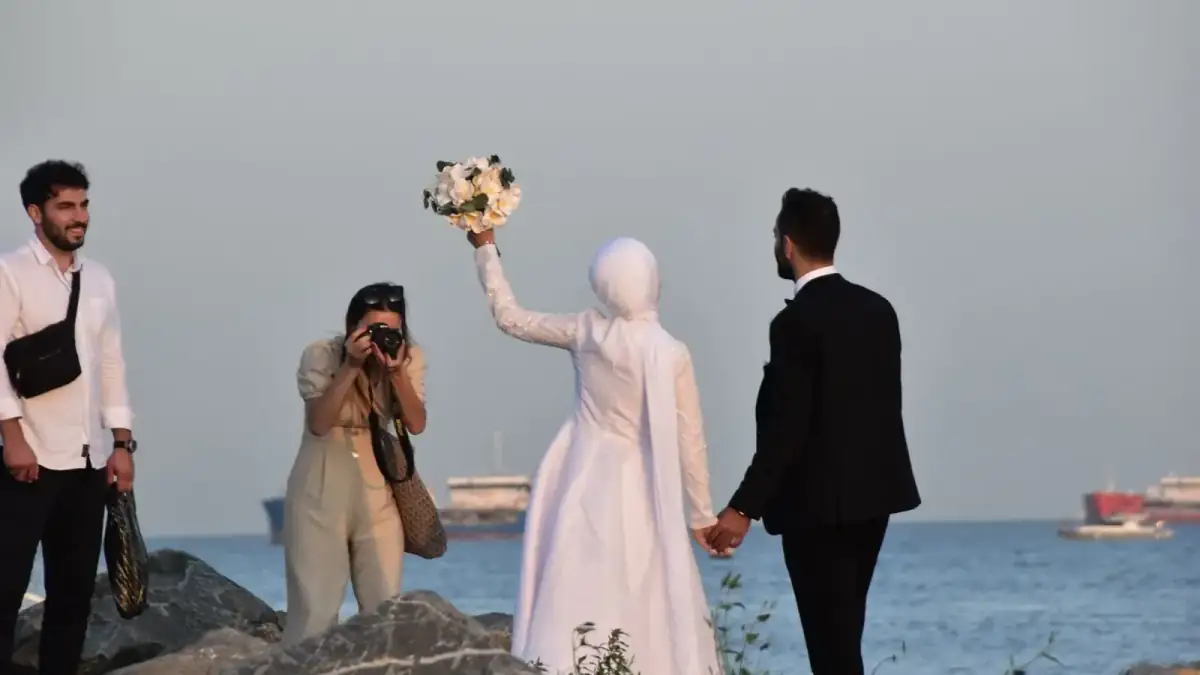
Short answer: most wedding photographers are best served by three lenses: a 24–70mm f/2.8 (or a lighter 28–70mm f/2.8) for most of the day, a 70–200mm f/2.8 for the ceremony and speeches, and one fast prime, usually a 35mm or 85mm at f/1.2–f/1.4, for the portraits couples share. If you send sneak peeks during the day, the standard zoom does the heavy lifting and the prime makes the frames people post. Pick lenses that let you change less often and keep shooting, because every lens swap is a moment you didn't deliver.
Why lens choice changes same-day delivery
Sneak peeks are judged on a phone screen within hours, not on a print weeks later. That changes the priorities. A lens that focuses reliably in a dim church gives you more keepers to send. A zoom that covers the whole getting-ready room saves the swap that would have missed the reaction. A consistent look across lenses means your straight-out-of-camera JPEGs need less correction before they go to the couple. Sharpness charts matter less than how many deliverable frames a lens produces per hour.
The kit by focal length
| Role | Canon RF | Sony E | Nikon Z | Fujifilm X |
|---|---|---|---|---|
| Standard zoom | RF 24–70mm F2.8 L IS USM, or the lighter RF 28–70mm F2.8 IS STM | FE 24–70mm F2.8 GM II | Z 24–70mm f/2.8 S II | XF16–55mm F2.8 R LM WR II |
| Telephoto zoom | RF 70–200mm F2.8 L IS USM Z | FE 70–200mm F2.8 GM OSS II, or FE 50–150mm F2 GM | Z 70–200mm f/2.8 VR S | XF50–140mm F2.8 R LM OIS WR |
| Wide prime | RF 35mm F1.4 L VCM | FE 35mm F1.4 GM | Z 35mm f/1.4 | XF33mm F1.4 R LM WR |
| Portrait prime | RF 85mm F1.4 L VCM | FE 85mm F1.4 GM II, or Sigma 85mm F1.2 DG Art | Z 85mm f/1.2 S | XF56mm F1.2 R WR |
| Details and rings | RF 100mm F2.8 L Macro IS USM | FE 90mm F2.8 Macro G OSS | Z MC 105mm f/2.8 VR S | XF80mm F2.8 R LM OIS WR Macro |
Third-party options widen the choice: Tamron's 35–150mm F2–2.8 (Sony E and Nikon Z) and Sigma's 28–45mm F1.8 DG DN Art (Sony E and L-Mount) are both popular with wedding shooters who want fewer lens changes.
The standard zoom: where most sneak peeks come from
Getting ready, details, family groups, the first look and the dance floor can all be shot with a 24–70mm f/2.8. That's why it's the lens most likely to be on the camera when the best early frames happen. Nikon's Z 24–70mm f/2.8 S II, announced in August 2025, weighs 675 g, which Nikon says makes it the lightest 24–70mm f/2.8 for full frame, and zooms internally. Canon's RF 28–70mm F2.8 IS STM, announced in September 2024, gives up 4mm at the wide end for a body that weighs about 490 g, which you'll feel by the evening. On Fujifilm, the second-generation XF16–55mm F2.8 is about a third lighter than the original at 410 g.
The telephoto zoom: ceremony and speeches
A 70–200mm f/2.8 lets you stay at the back of a ceremony and still fill the frame with a reaction. Canon's RF 70–200mm F2.8 L IS USM Z, announced in October 2024, zooms internally and works with Canon's extenders, so its length doesn't change as you zoom in a quiet room. Sony's FE 50–150mm F2 GM, launched in April 2025, is the most interesting alternative: a full stop brighter than f/2.8, wide enough for groups at 50mm and long enough for vows at 150mm. It has no optical stabilisation and is heavy, so try it before a ten-hour day.
The primes: the frames couples post
A 35mm prime is the storyteller's lens for getting ready and candid moments. An 85mm at f/1.2–f/1.4 gives the shallow-focus portraits that get shared first. Sigma's 85mm F1.2 DG Art for Sony E and L-Mount, announced in September 2026, is billed by Sigma as the smallest and lightest autofocus 85mm f/1.2 for full-frame mirrorless, at 905 g in L-Mount. If you shoot the couple's portraits in a short window between ceremony and reception, the portrait prime is the lens that fills the first sneak-peek gallery.
Which three to buy first
- One body, three lenses: 24–70mm f/2.8, 70–200mm f/2.8, 85mm f/1.4.
- Two bodies: keep the standard zoom on one and a 70–200mm or 85mm on the other, so you never change a lens during the ceremony.
- Travelling light: a 28–70mm f/2.8 and a 35mm f/1.4, plus a 50–150mm f/2 if you're on Sony.
- One-lens day: Tamron's 35–150mm covers getting ready to speeches on Sony E or Nikon Z, at the cost of weight.
Getting sneak peeks off the camera
Shoot RAW+JPEG so the JPEGs can go straight out while the RAW files stay on the card for the full edit. Set your picture profile and white balance before the day so the JPEGs need little work. Tether the camera to your phone with CloudTether and each frame is copied off as you shoot, then delivered to the couple's gallery or a shared folder. On Canon and Nikon you can rate in camera and send only rated shots, so a quick star during a lull is your cull. JPEG only and resized delivery keeps uploads quick over mobile data. The whole routine is in our same-day wedding delivery workflow and the sneak peeks guide.
What to skip
Superzooms with slow apertures struggle in churches and reception rooms. Very long primes are rarely worth carrying at weddings. And don't buy a lens to fix a workflow problem: if sneak peeks are slow because frames sit on the card until midnight, a faster lens won't help. Getting them off the camera will.
Sources
Checked on 15 November 2026. Specifications and prices change; confirm with the maker before you buy.
- NIKKOR Z 24-70mm f/2.8 S II — Nikon
- Canon unlocks new creative possibilities with the RF 28-70mm F2.8 IS STM — Canon UK
- Canon adds three RF lenses to its EOS R system — Canon UK
- Sony launches FE 50-150mm F2 GM — Sony Europe
- Sigma announces 85mm F1.2 DG Art — Sigma
- What's new with the FUJINON XF16-55mm — Fujifilm House of Photography
- Tamron 35-150mm F/2-2.8 Di III VXD for Nikon Z — Tamron
Product names are trademarks of their owners and are used to identify products only; no affiliation or endorsement is implied.
Get every shot off the camera as you shoot
CloudTether tethers Canon, Nikon, Sony and Fujifilm cameras to an iPhone, iPad or Android phone over USB or Wi-Fi and delivers each photo to your cloud storage, galleries or FTP server while you work.