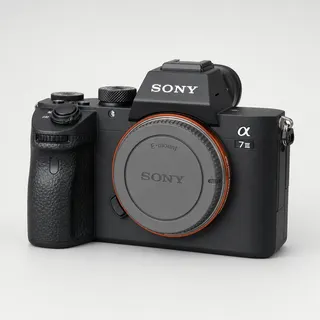
Sony α7 III to Dropbox: auto-upload as you shoot
Tether your Sony α7 III to your phone over USB or Wi-Fi and deliver every shot straight to Dropbox the instant you press the shutter — no laptop, no SD-card import. The go-to for client delivery folders.
By the CloudTether team · Updated
How it works for Sony α7 III → Dropbox
Your phone sits between the camera and Dropbox: no laptop, no card reader.
 Step 1Sony α7 III
Connect it to your phone with a USB-C data cable or over Wi-Fi, then shoot as normal.
- Step 2Your phone
CloudTether copies each full-resolution photo off the camera seconds after the shutter and uploads it once.
- Step 3Dropbox
Every shot lands in Dropbox while you keep shooting — and in any other destination on the shoot.
How to live-upload Sony α7 III photos to Dropbox
Connect your Sony α7 III to your phone and every shot lands in Dropbox live as you shoot. Here's the full setup, start to finish:
- 1
Connect your Sony α7 III
Connect over USB with the camera in PC Remote mode for a stable, high-speed tether. Newer bodies (α1, α9 III, α7 IV, α7R V, α7C II) can also tether over Wi-Fi with wireless PC Remote — not yet tested by us, so USB is the dependable path. In PC Remote, set Still Img. Save Dest. to PC+Camera to keep a copy on the card.
- 2
Connect Dropbox
Connects via Dropbox OAuth — no passwords stored. Pick where photos should land — each session becomes its own dated folder. Share a link before you pack up the kit.
- 3
Shoot as normal
Every frame your Sony α7 III captures is detected and downloaded at full resolution while you keep shooting — JPEG, or RAW.
- 4
Photos deliver to Dropbox
Each photo uploads from your phone once and lands in Dropbox live, seconds after the shutter — and fans out to any other destinations on the session too.
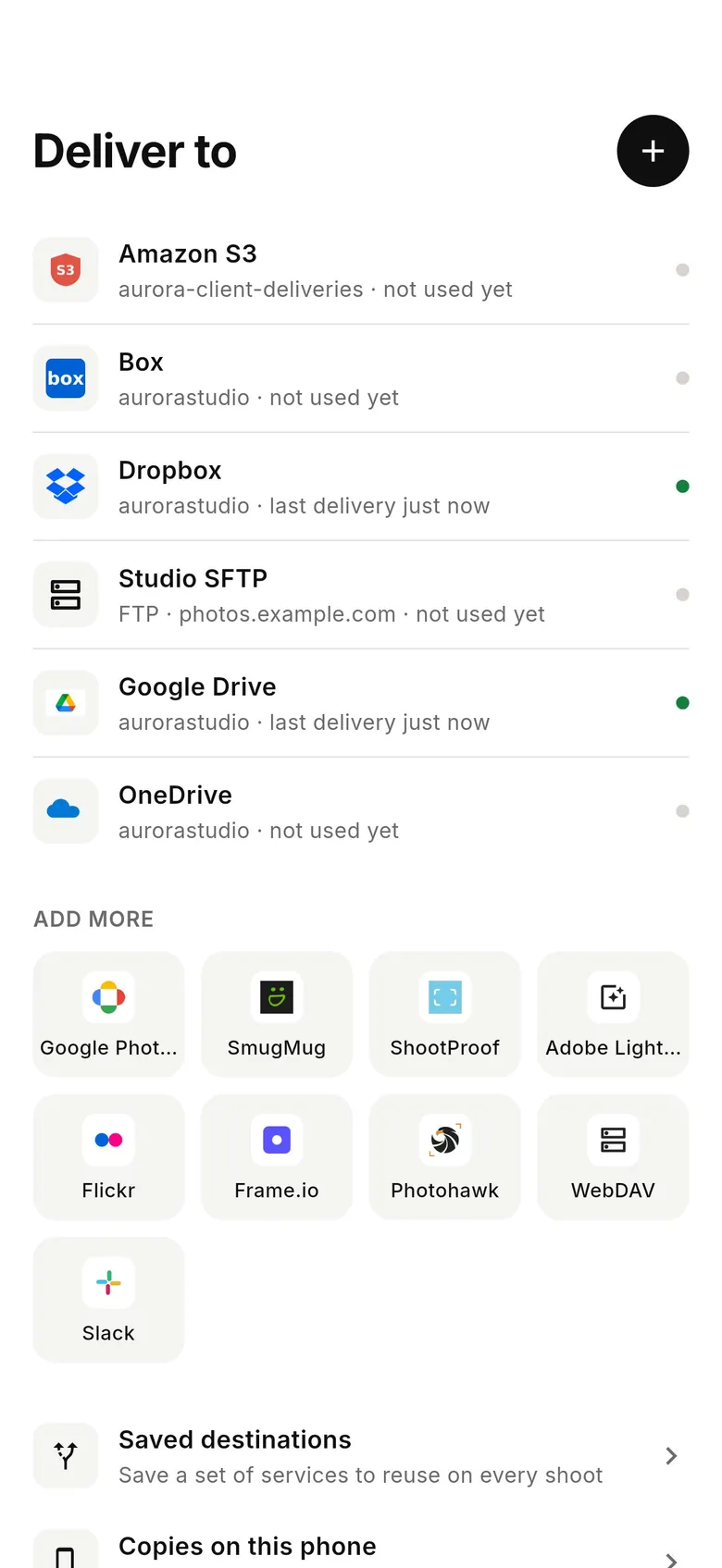
Dropbox in the CloudTether app
Connect Dropbox once, then every shoot from your Sony α7 III can deliver to it.
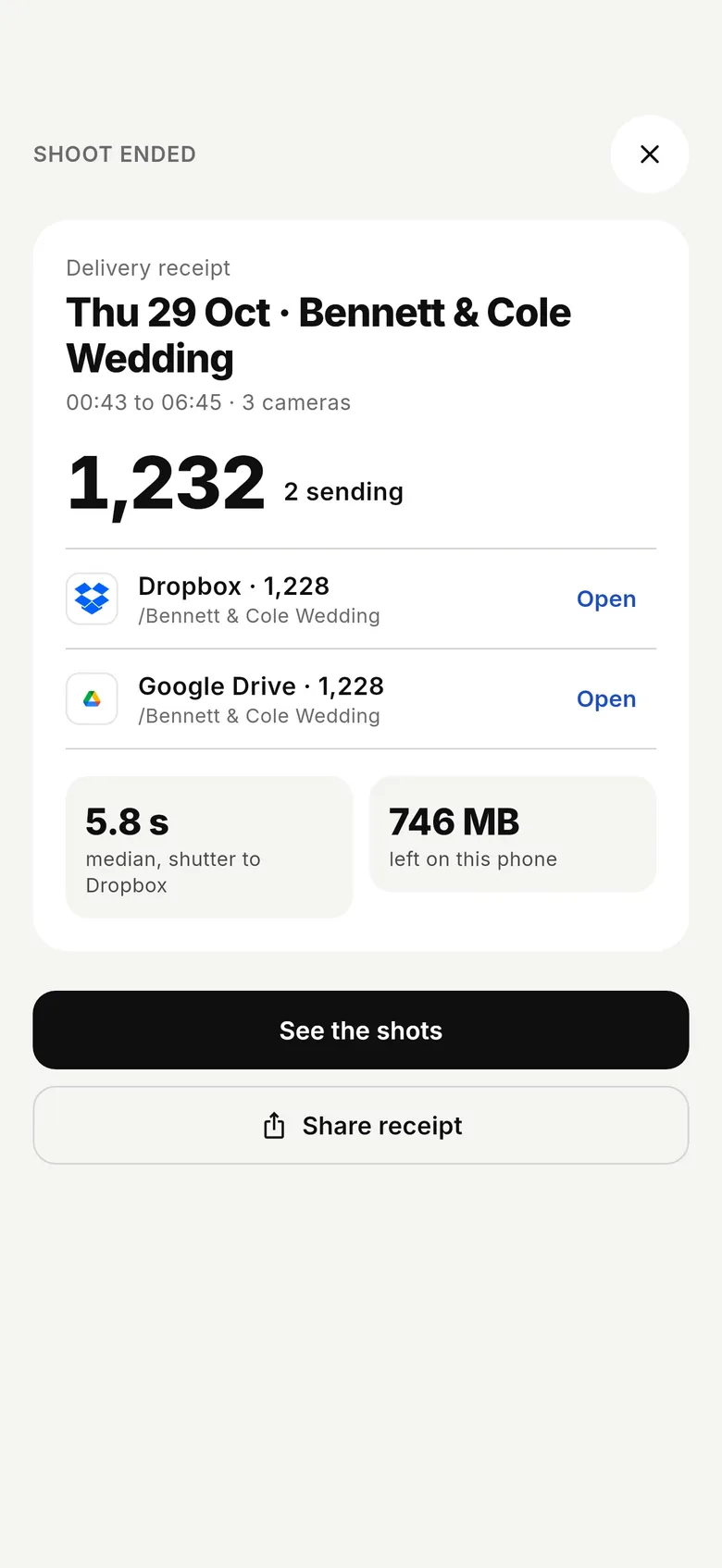
Connecting the Sony α7 III
The α7 III has a USB-C port alongside its older Multi/Micro USB terminal; use the USB-C port and a data cable to a USB-C phone or iPad, or Apple's camera adapter for a Lightning iPhone. Set MENU → Setup → USB Connection → PC Remote first. Any other USB mode (mass storage, MTP) mounts the card instead of tethering, and an active smartphone connection keeps the port busy.
On current firmware the PC Remote settings include Still Img. Save Dest.; choose PC+Camera so the card keeps a copy of every frame. Treat the α7 III as a USB body in CloudTether: its wireless tethering is limited compared with newer Alphas, and the cable is the path we support for paid work.
Every shot is sent — rated send isn't available over Sony tethering. The α7 III offers compressed RAW, which keeps ARW files lighter; over mobile data, RAW+JPEG with JPEG only is the fastest way to keep a gallery current while the ARW stays on the card.
The α7 III is one of the most widely owned full-frame bodies, often kept as a second camera next to an α7 IV. Because it's a USB body in CloudTether, plan the cable route: a short USB-C cable to a phone on the strap or a belt clip, with strain relief at the camera end so the port isn't levered.
Getting the most out of Dropbox
Dropbox takes every file exactly as the camera wrote it — JPEG, RAW or both — so one folder can be the off-site backup and the client hand-off at once. By default CloudTether creates a folder named after the shoot on the first delivery; you can pick an existing folder instead, such as one already shared with the client or your editor, so new frames appear for them without another link.
If the folder is for clients rather than for you, open Dropbox in the Deliver tab, choose “What gets sent” and pick “JPEGs for clients” (2048 px JPEGs named after the shoot). For a backup folder, leave it on Everything.
Dropbox is also the simplest hand-off to a retoucher working elsewhere: the shared folder syncs to their computer, and Lightroom Classic's Auto Import can watch it, so files reach their catalog while you're still shooting. Each shoot gets its own folder, and a camera reconnecting on a later day starts a new shoot on the same destinations, so next week's job never lands in last week's folder.
- Share the shoot folder's link before you start — it fills as you shoot.
- RAW files use Dropbox storage fastest; JPEG only or a client preset saves space.
- If Dropbox signs CloudTether out, shots wait on the phone until you reconnect it.
A typical Sony α7 III to Dropbox workflow
- Set MENU → Setup → USB Connection → PC Remote on the α7 III and, if your firmware has it, Still Img. Save Dest. → PC+Camera.
- Plug in over the USB-C port (not the Micro-USB terminal) and pick the Dropbox folder for the job.
- Shoot RAW+JPEG; Dropbox gets every ARW and JPEG as a running backup, or JPEGs only if the folder is for the client.
Sony α7 III to Dropbox: what to know
The Sony α7 III is a full-frame body — all-round wedding, portrait and event workhorse — one of the most popular full-frame bodies. CloudTether pulls each frame off it the moment you shoot and delivers it to Dropbox: the JPEG, the ARW RAW, or both, exactly as the camera wrote them.
ARW files are far larger than JPEGs, so if your Dropbox recipients only need to view or pick images, deliver JPEG for the fastest turnaround and keep the ARW originals on the card or in a second destination.
Each session becomes its own dated folder. Share a link before you pack up the kit.
Connects via Dropbox OAuth — no passwords stored.
Sony α7 III to Dropbox — FAQ
Can I upload Sony α7 III photos to Dropbox automatically?
Yes. Tether your Sony α7 III to your phone with CloudTether over USB or Wi-Fi, and every shot uploads to Dropbox live as you shoot — no card offload and no card import.
Can I send Sony α7 III photos to Dropbox live while I'm shooting?
Yes — each frame lands in Dropbox seconds after the shutter, live, while you keep shooting. There's no SD-card step in the middle.
How does CloudTether connect my Sony α7 III to Dropbox?
Your Sony α7 III tethers to your phone over USB or its own Wi-Fi; connects via Dropbox OAuth — no passwords stored.
Do I need a laptop to send Sony photos to Dropbox?
No. CloudTether runs on your phone — your Sony α7 III connects to the phone and uploads straight to Dropbox over mobile data or Wi-Fi, anywhere you have signal.
Can I send RAW files from my Sony α7 III to Dropbox?
Yes. Dropbox receives the files exactly as your Sony α7 III wrote them — RAW, JPEG or both. To save mobile data, turn on JPEG only and leave RAW files on the camera.
Which port on the α7 III should I use for Dropbox uploads?
The USB-C port, with a data cable. The α7 III also has a Micro-USB terminal, but USB-C is the simpler, more robust connection to a USB-C phone.
Can the α7 III send to Dropbox over Wi-Fi?
Treat the α7 III as a USB body in CloudTether — its wireless tethering is limited. Once it's on the cable, your phone uploads to Dropbox over mobile data or Wi-Fi.
 Canon EOS R5 to Dropbox
 Canon EOS R6 Mark II to Dropbox
 Sony α7 IV to Dropbox
 Nikon Z6 III to Dropbox
 Nikon Z8 to Dropbox
 Fujifilm X-T5 to Dropbox